How To Do A Roundhouse Kick

The roundhouse kick is one of the most commonly used kicking techniques in martial arts due to its ease of use, range speed, as well as decent power.

It is a rotational kick whose mechanics and motions are similar to a soccer kick. It involves a combination of flexibility, balance, coordinating and timing.

The roundhouse kick is also known as the swinging kick or power angle kick. It is used in many different martial arts styles like kickboxing, karate, Muay Thai, and Taekwondo.

In this blog post, we check out how to do the roundhouse kick in 5 simple steps.

Standard fight stance

Start with a standard fight stance; your feet should be two shoulder widths apart. Your kicking leg should be at the back, and parallel, pointing slightly to the side. Make sure your guard is kept up throughout.
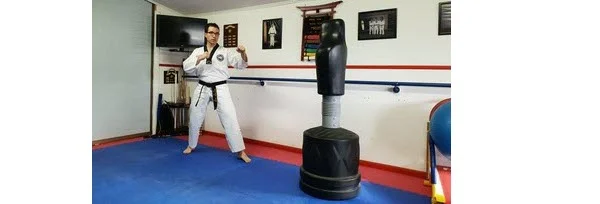
Instructor demonstrating the Standard fight stance for Round house Kick
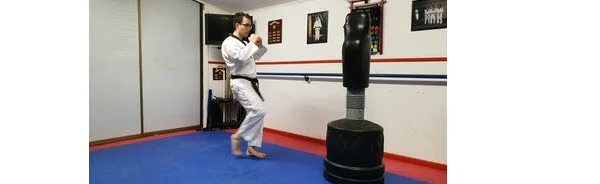
Instructor demonstrating the Twist the hip and leg to aim for Round house Kick

Twist the hip and bring your leg to aim

Twist your hips, raise your knee and drive your rear leg forward.

Make sure your body is kept upright with your weight on the standing foot for balance.

Rotate leg position for the kick

Then bring the kicking leg through and let your standing foot rotate at 180 degrees to the outside, which will bring your heel facing the target. You’d want to turn your bottom foot all the way to allow it go through full rotation to generate maximum kicking power. This move will make your shoulder, hips, and body flip across.
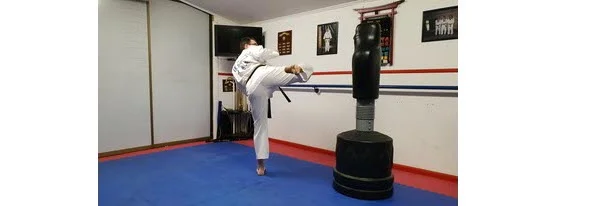
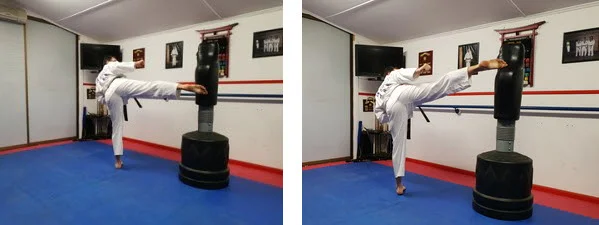
Instructor demonstrating the rotate let position to kick for Round house Kick
Instructor demonstrating the snap kick for Round house Kick

Snap kick

To take the kick, straighten your leg by extending your knee and hips. For increased reach and power, throw your hips forward to allow for a whole body movement.

The instep of your feet should be the point of contact with your target. The kick can be targeted at the ribs or at the head depending on your flexibility.

Back to the standard fight form

After getting your kick in, snap your leg back immediately to avoid being vulnerable to counter attacks. The quicker and swifter you act, the less time your opponent has to attack since his defense will be down. This swiftness will also prevent overswinging. Then set your kicking feet down in front of you as you complete the kick.
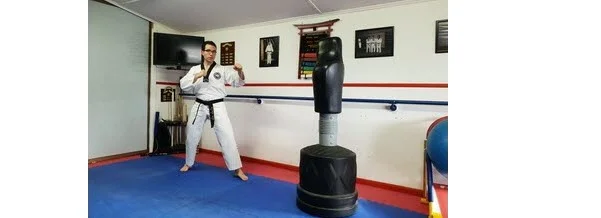
Instructor demonstrating how to return to the standard fight form for Round house Kick

FAQs

Is the roundhouse kick suitable for beginners in Taekwondo?

Yes. The roundhouse kick is commonly taught to beginners in Taekwondo because it helps develop balance, hip rotation and coordination. While it may feel awkward at first, regular practice helps build confidence and control over time.

Why is hip rotation important for a Taekwondo roundhouse kick?

Hip rotation helps generate power and stability in the roundhouse kick. Learning to rotate correctly allows the kick to feel smoother and reduces unnecessary strain on the legs and lower back.

What should I focus on when practising the roundhouse kick?

When practising the roundhouse kick, focus on balance, controlled movement and returning to a stable fighting stance. Clean technique is more important than speed or force, especially when learning.

Can I practise the roundhouse kick safely at home?

Yes. The roundhouse kick can be practised at home if you have a clear, safe space to move in. Always warm up properly, train within your limits, and stop immediately if you feel discomfort or pain.

How long does it take to get comfortable with the roundhouse kick?

This varies from person to person. Many students begin to feel more comfortable after consistent practice over several weeks, as balance, coordination and timing improve gradually.

Where can I learn proper Taekwondo kicking technique in Western Sydney?

Power With Purpose offers structured Taekwondo training across Western Sydney, including Parramatta, Toongabbie, Toongabbie West, Blacktown, Claremont Meadows and Catherine Field. In-class training helps students refine kicks like the roundhouse with guidance and feedback.

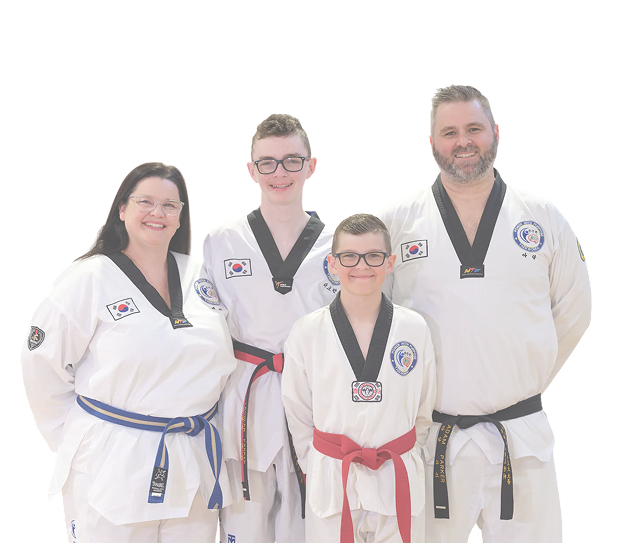
Families who train together,
grow together.

At Power With Purpose, families train side by side in a supportive, mixed-age environment where confidence, focus, and respect grow over time. Training is calm, structured, and welcoming for beginners, adults, and children.

Book a Trial Class

    Partners
    Partners
    Partners
    Partners
    Partners