The Importance of Sleep and ASMR
Who doesn’t enjoy a good sleep? If you were to ask my 6 month old nephew (if he could talk) he would affirm that sleep is pointless and the best option is to fight it off and keep playing all day.
The rest of us all have the general idea that sleep is good for us. We all need to rest at some point and recharge our “batteries”, but there is more going on than just feeling refreshed.

What are the benefits of sleeping?
Possibly the most important benefit of sleep is brain function and activity. When you sleep your brain processes and stores information you learnt during the day while also prepareing for the next. Think of a lack of sleep like using your phone, but NEVER closing any apps, EVER. If you want to find an old app, you can’t search for it through your home screen.
You have to scroll through every single app you have ever opened to find the one you want to use. Sleep is, for want of a better comparison, like pressing the “Close all Apps” button.
It clears up your head, stores what needs to be stored and refreshes everything for you mentally so you can essentially “start again” when you wake up.
Your physical health is the next great benefit of getting a good night’s sleep. While you sleep your body is repairing itself. You wouldn’t do maintenance on a machine while it was switched on would you? You can’t, all the parts would still be moving. But once the machine is switched off (sleeping), you can repair what needs to be fixed. If we don’t sleep, or barely sleep, our body does not have enough time to repair our hearts, blood vessels, liver, kidneys, stomach, muscles, bones etc.
Do you think sometimes you eat too much? Well, guess what? Sleep helps maintain a healthy balance of the hormones that make you feel hungry (ghrelin) and hormones that make you feel full (leptin). When you don’t get enough sleep, your level of ghrelin goes up and your level of leptin goes down. This makes you feel hungrier than when you’re well-rested. If you get enough sleep, your leptin levels can rise again, helping you feel full and content after meals.
Sleep also affects how your body reacts to insulin, the hormone that controls your blood glucose (sugar) level. Sleep deficiency results in a higher than normal blood sugar level, which may increase your risk for diabetes.
A lot of you need to go to bed!
The Sleep Health Foundation survey found that people experienced the following several days/nights a week:
- 20 per cent have difficulty falling asleep
- 35 per cent wake up feeling unrefreshed
- 19 per cent stated that sleepiness interferes with daily activities
- 19 per cent said they were irritable and moody

How can you sleep better?
There are many simple ways to help yourself get a better night of sleep. Some are simpler than others, I would recommend starting with the first few steps to see if that makes a difference to your own sleep pattern.
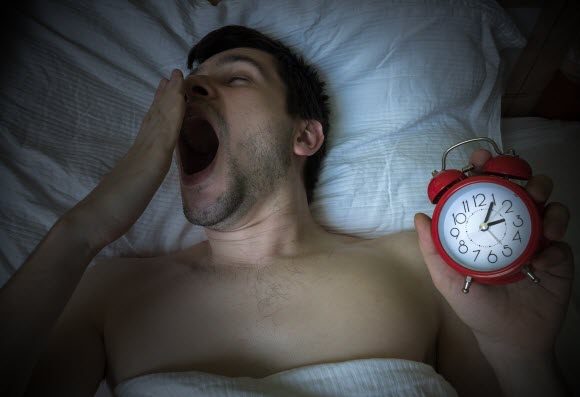
1. Stick to the same sleep schedule. Make your bedtime and your wake up time the same everyday, even on weekends. This will help regulate your “body’s clock” and will help you fall asleep and stay asleep. This can be difficult, many people desire a big sleep in on weekends. This can actually become detrimental if you need to get up early again on Monday, as you have disrupted your body’s clock and reset it over the weekend, making that first day back a really big deal for your body and brain.
2. Practise a relaxing bedtime ritual. Avoid doing anything that is too stimulating. Playing video games, doing work, drinking coffee or eating foods high in sugars can all make falling asleep much more difficult. Practise and create a routine that leads to you falling asleep. I find it most relaxing to lie down when I know I have all my bags packed and ready for the next day, if something hasn’t been done, I will find myself thinking on it and not relaxing.
3. Exercise daily. Without any physical activity, we can have so much energy stored up that our body simply doesn’t feel like going to sleep. Being more active during the day will help burn away some energy, giving your body and brain the desire to shut down for that routine maintenance mentioned earlier.
4. Make your room sleep friendly. Make sure that your room is free from bright lights, that there aren’t any random noises occurring during the night to wake you up or disturb you. Make sure the temperature in your room at a level that you can relax in, this naturally becomes difficult in our more extreme seasons, but there are always ways you can intervene, ie an extra blanket in winter and fan in summer.
5. Sleep on a comfortable mattress and pillows. If nothing previously mentioned is helping, have a consideration of how old your mattress and/or pillows are. If the mattress is close to the 10 year mark it may be time for something new and better fitting to you. Pillows have a shorter recommend lifespan of around 6 months to 3 years depending on how much they are used and how well/often they are washed.
ASMR Auto-Sensory Meridian Response
What does that all mean? Here is a rundown of the words themselves
- Autonomous – spontaneous, self-governing, within or without control
- Sensory – pertaining to the senses or sensation
- Meridian – signifying a peak, climax, or point of highest development
- Response – referring to an experience triggered by something external or internal
That still doesn’t quite clarify what I am on about. It is described by some of those susceptible to it as ‘akin to a mild electrical current…or the carbonated bubbles in a glass of champagne’.
The best examples I can think of is the tingly feeling you get on the back of your head and down your back during maybe a haircut or a massage. Some people experience this when someone is playing with their hair, people have even reported this type of feeling during medical examinations or doctor appointments. Listening to the sound rain hitting various surfaces, to the sound of people painting, typing or mumbling softly, can all bring on this tingly feeling.
It is known as a bit of a phenomenon and was not officially named until only recently in 2010.

What does all that have to do with sleeping better?
Everyone has their own individual ‘triggers’ for whatever causes them to feeling the sensation that is ASMR. Across youtube there are hundreds, even thousands of different trigger videos of people recreating the scenarios, situations and sounds that cause ASMR. Discovering who your own personal trigger is and using a youtube video can greatly help one relax, unwind and fall asleep.
I have personally been using ASMR videos for nearly 2 years now and I honestly feel that I’ve never slept better. There are nights where I am too tired to even care about watching or listening to a video online, but the nights where I may be overthinking some topics, or where I’m finding it difficult to shut down, an ASMR puts me right to sleep.
I’ve linked some of various favourite ASMR Youtubes below. Please let me know if you find any results for yourselves from using their videos.
Until next time! Lights off and get to bed!